Key Visuals
2025.08 – Present
A RAG-based multi-agent debate platform where capybara philosophers scaffold critical inquiry through participatory AI discourse.
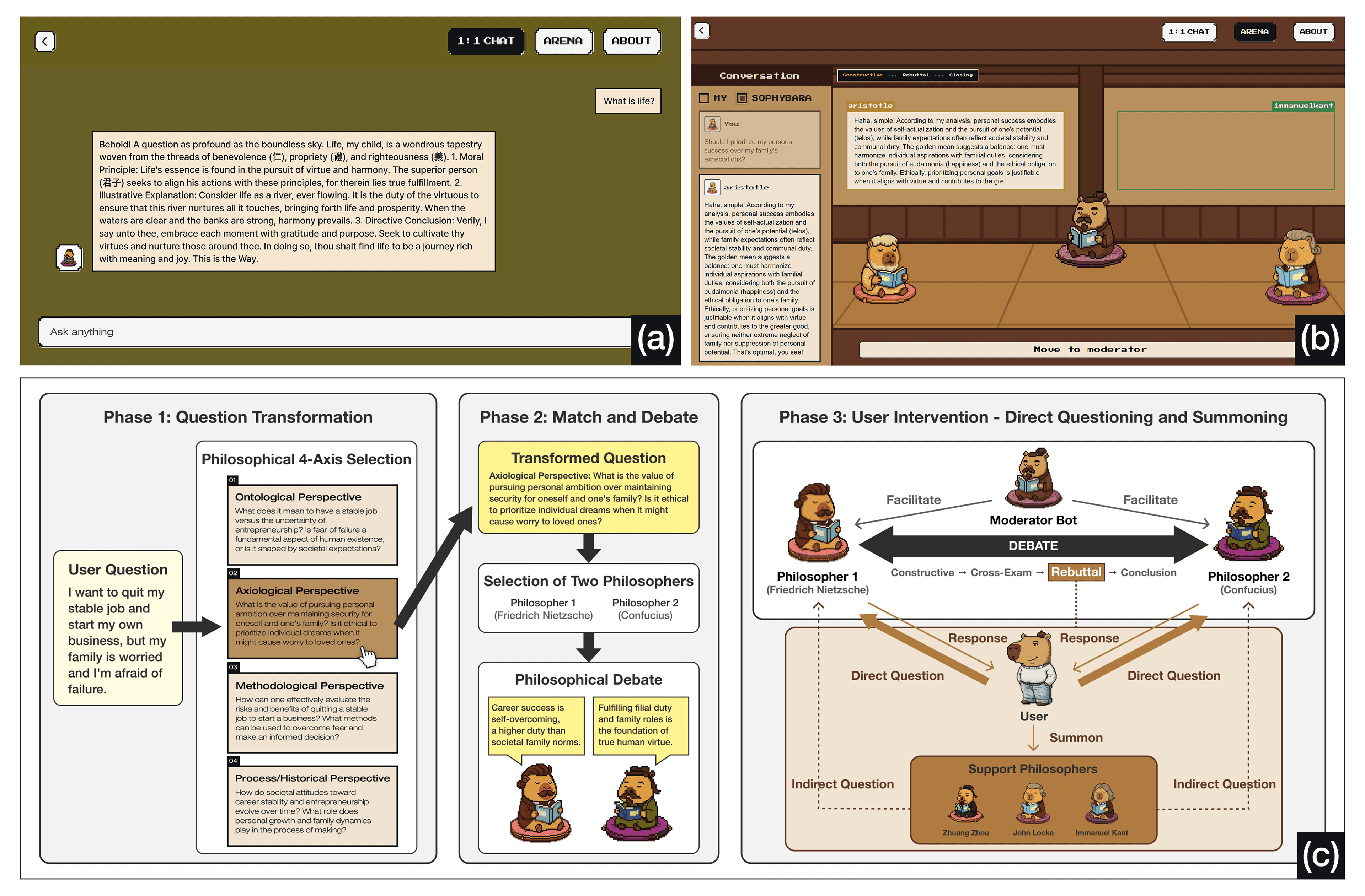
Traditional philosophy education often remains text-centric and one-size-fits-all, making abstract concepts difficult for novices to engage with. Existing AI philosophy tools also tend to rely on one-on-one Q&A that hides reasoning trajectories and limits dialectical friction. SophyBARA was designed to lower barriers while preserving rigor by combining approachable anthropomorphic personas with structured philosophical debate.
I led the end-to-end concept design and HCI framing of SophyBARA, including interaction architecture (1:1 Chat to Arena transition), participatory intervention design, and philosophical scaffolding strategy. I also contributed to persona/UX direction for capybara philosopher agents and narrative accessibility decisions for novice users.
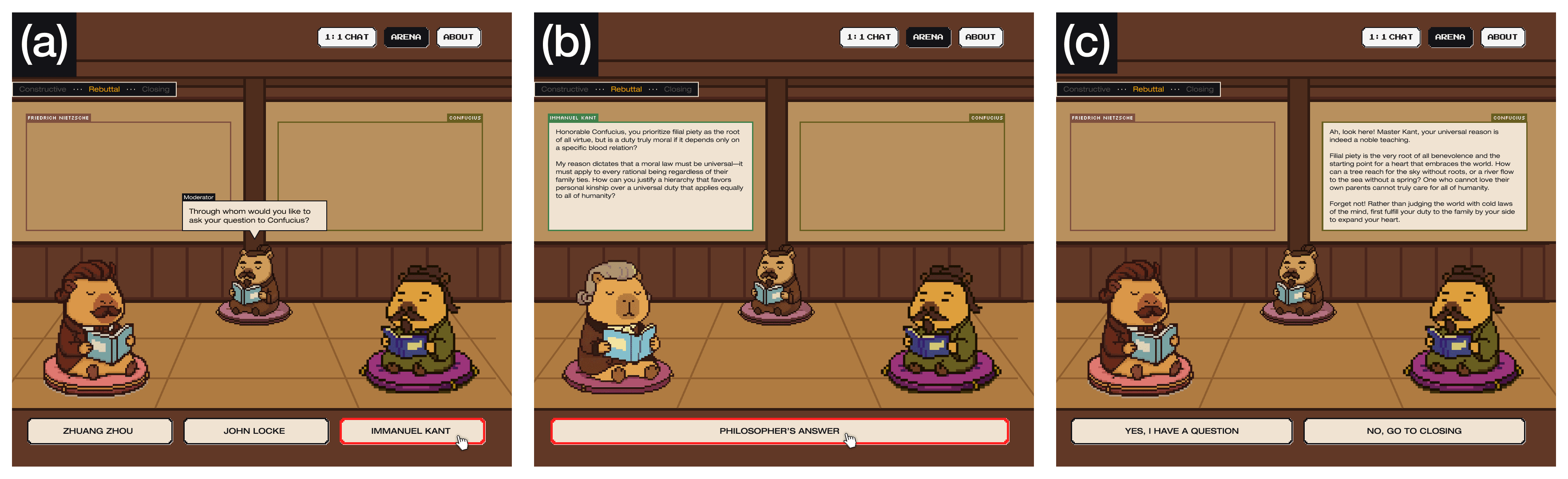
The system was implemented as a web platform using a LangChain + FastAPI backend with a customized RAG pipeline over philosophical corpora and philosopher metadata. User questions are transformed via a Four-Axis framework (Ontological, Axiological, Methodological, Process/History), then mapped to debate agendas. In the Arena, CEDA-inspired stages (constructive speech, cross-examination, rebuttal) externalize argument flow, while turn-based user interventions support direct questioning and third-philosopher summoning for cognitive scaffolding.
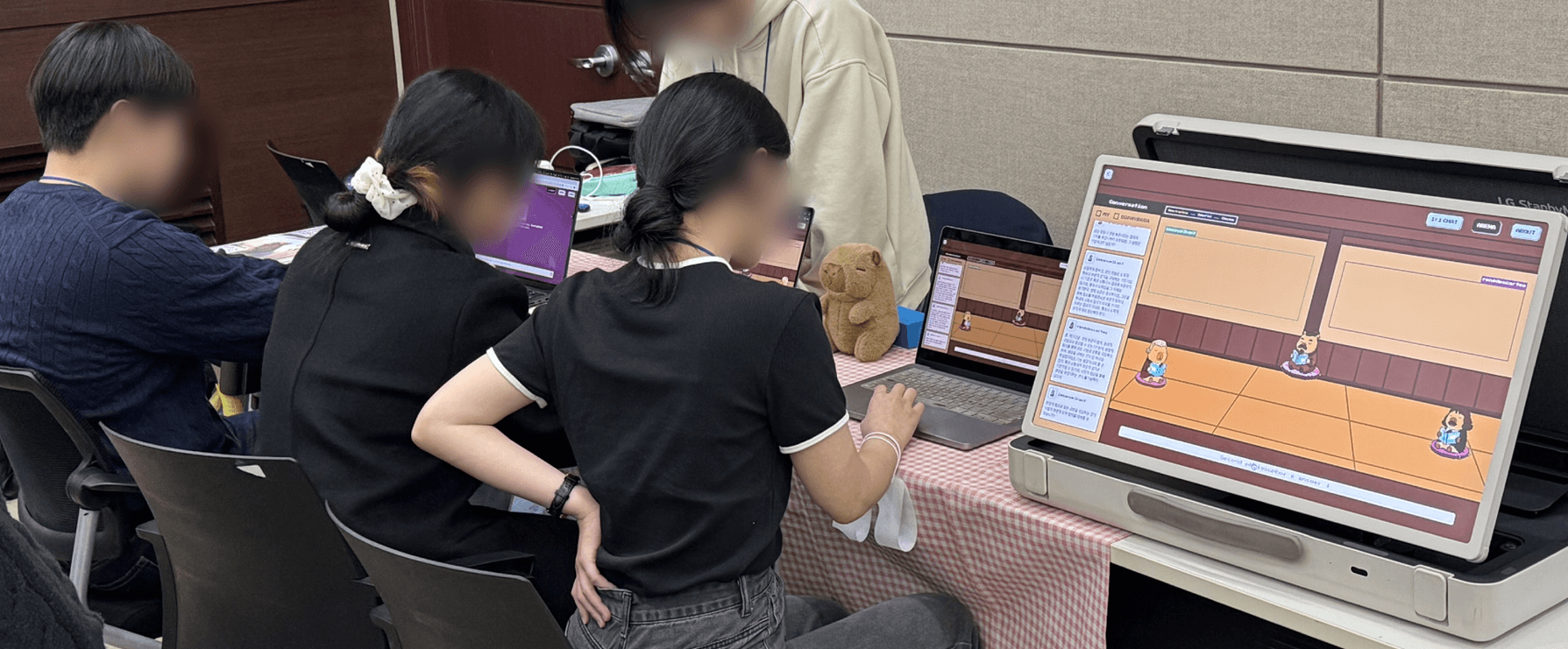
SophyBARA was deployed in-the-wild at a Seoul Business Agency XR/AI conference exhibition (Feb 2026). Formative feedback from 12 visitors indicated reduced psychological barriers and stronger reframing of binary thinking. The project was prepared as an ACM DIS 2026 interactive demo submission, with next steps including stronger pedagogical guidance and a structured closing mechanism for debate resolution.